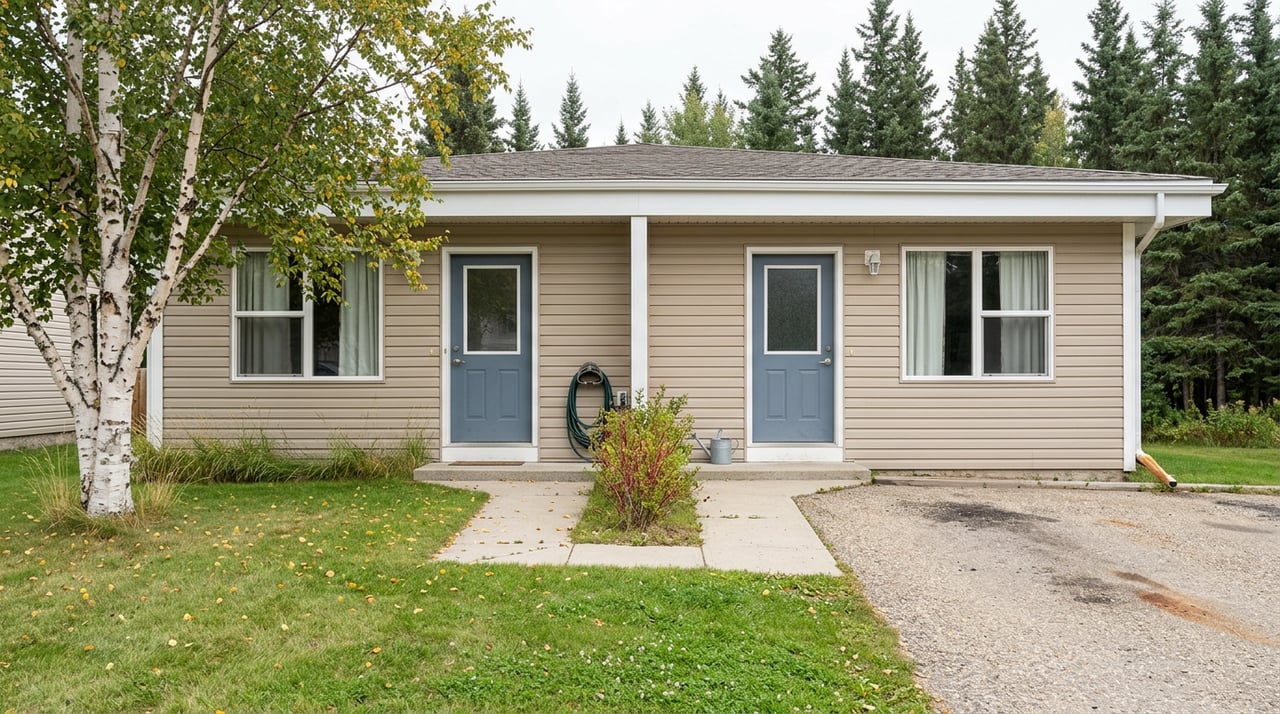
Selling a University West Duplex With a Tenant Still in the Lease: What Alaska's Transfer Rules Actually Require
August 13, 2026
August 13, 2026
Most sellers assume the purchase agreement settles the tenant question. It doesn't. Under Alaska law, a fixed-term lease doesn't end because a building changes hands, and if you own one of University West's small duplexes near UAF, there's a real chance your tenant's lease was never built to expire anywhere near your closing date in the first place.
That mismatch, not the sale price, is usually what actually shapes how a summer sale on a University West rental plays out.
A fixed-term lease in Alaska binds whoever owns the property, not just the person who originally signed it. The Alaska Court System's own consumer guide to the Landlord and Tenant Act is direct on this point: a buyer of rental property should confirm the seller has properly transferred security deposits and notified tenants in writing of the sale, because if that handoff doesn't happen, the seller stays legally responsible to the tenant for that money even after closing.
That means you can't just hand over keys and walk away from an occupied lease. Two things have to happen: the security deposit gets transferred to the buyer, and the tenant receives written notice that ownership has changed. Skip either step and the departing owner is still on the hook if a dispute comes up later, according to the Alaska Court System's landlord and tenant guide.
For a University West duplex, that deposit is not a rounding error. JWL Property Rentals, which manages roughly 350 rental units across Fairbanks, North Pole, and Eagle River, cites an average portfolio rent of $1,660 a month, which puts the security deposit at $3,320 under the two-month cap described in The Alaska Landlord & Tenant Act guide for unfurnished units. That's the figure that has to move cleanly between seller and buyer at the table, on paper, before the sale is final.
Most Fairbanks rentals run on a rolling twelve-month clock. A tenant signs in whatever month the unit turns over, and the lease expires that same month a year later. Across the borough, that means a lease could end in almost any given month.
University West doesn't follow that pattern as often. The neighborhood sits inside the loop built around the University of Alaska Fairbanks, and its rental stock, especially the small duplexes and side-by-side units marketed to students and visiting staff, tends to run on the school year instead. UAF's own International Student and Scholar Services office notes that family housing agreements typically run for the length of the academic year, a different rhythm than the twelve-month terms used for UAF employee housing. Private landlords renting to that same population near campus commonly borrow the same calendar: a lease that starts in August or September and ends in May.
| Lease pattern | Typical start | Typical end | Effect on a summer closing |
|---|---|---|---|
| Standard 12-month Fairbanks lease | Any month | Same month, one year later | Roughly even odds the lease ends near your closing date |
| Academic-cycle lease common in University West | Late August or September | May | The May end date may precede a June, July, or August closing |
If your University West duplex goes on the market in the warmer months, when Fairbanks sellers tend to be most active, and your tenant signed on that academic calendar, the May end date may come before your closing date. Compare the lease end date with your expected closing date; the academic calendar can create a different timing issue from other Fairbanks rentals.
Sellers tend to fixate on sale price and treat the lease as a footnote. The real risk sits somewhere else: what happens to the unit in the gap between one tenant leaving and the next one signing.
JWL Property Rentals describes a case involving a self-managed Fairbanks duplex where the tenant left in February with four months still remaining on the lease. The lease had no early-termination clause, so the owner had no enforceable way to collect anything for the vacancy, and the unit sat empty until April. The gap cost roughly $3,320 in lost rent, in a market the property manager describes as slow to re-rent through the winter.
That's the exact kind of gap a buyer's underwriting reacts to. Alaska multifamily investors already price in extra caution for Fairbanks specifically. One multifamily acquisition guide covering the state's market puts Fairbanks cap rates 50 to 100 basis points wider than Anchorage's, reflecting the smaller, more cyclical local economy. A buyer weighing that spread on your duplex isn't asking about your paint or your roof first. They're asking exactly when the current lease ends and what the re-rental gap looks like if it doesn't renew right away.
A seller who can answer that with a documented end date, a clean deposit-transfer plan, and a rent roll showing on-time payment history is negotiating from a different position than one who can only guess.
Can I just end my tenant's lease early so the unit is vacant for a buyer? No. Wanting to sell isn't a legal reason to end a fixed-term lease early in Alaska. A tenant paying rent on schedule under a valid lease keeps the right to stay through the lease term regardless of a pending sale, and the new owner inherits that same obligation.
Does the buyer have to honor the same security deposit terms I set? Yes. The deposit transfers along with the lease, and Alaska's cap of two months' rent for an unfurnished unit stays in place regardless of who owns the building.
What if my tenant is month-to-month instead of on a fixed lease? That's the more flexible scenario. Either side can end a month-to-month tenancy with 30 days' written notice, which gives a seller who wants vacant possession a real path to close empty, just one that takes planning rather than a snap decision.
Selling a tenant-occupied duplex near campus isn't a problem you solve the week of closing. It's a timeline you build the day you decide to list, matched against a lease calendar that doesn't run on the same clock as the rest of the Fairbanks rental market. If you're weighing that timeline against a listing date, Andie Ornelas can walk through your lease terms and put together a marketing plan built around your actual closing window, not a guess.
This article is general information, not legal, tax or financial advice. Consult a qualified professional about your situation.
Stay up to date on the latest real estate trends.


We gain a dedicated team that’s always available, combining collective expertise and strategic, tailored marketing to ensure your home is represented at its absolute best.