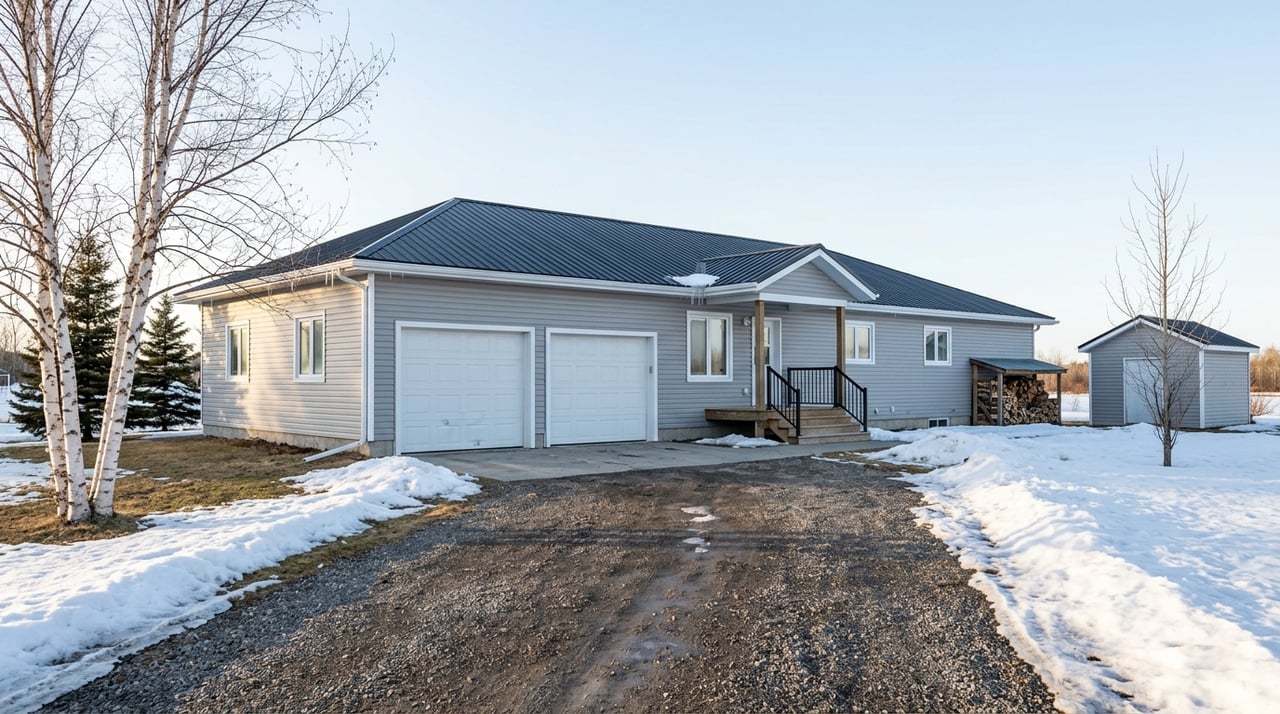
North Pole Alaska Seasonal Living: What to Know Year-Round
June 4, 2026
June 4, 2026
Wondering what it’s really like to live through a full year in North Pole, Alaska? The answer is simple: the seasons shape almost everything, from your commute and errands to your outdoor plans and even the pace of your day. If you’re thinking about moving here or buying a home nearby, understanding that seasonal rhythm can help you make a more confident decision. Let’s dive in.
North Pole sits about 14 miles from Fairbanks in the Fairbanks North Star Borough, so residents benefit from being close to a regional hub with road, rail, and air connections. That location helps with access to work, travel, and services, but daily life still feels very tied to Interior Alaska’s weather and daylight patterns.
In North Pole, the calendar matters less than the conditions outside. Routines often shift based on temperature, road conditions, snow cover, and how much daylight you have to work with. That means seasonal living here is not just about weather. It is about planning your time differently throughout the year.
NOAA climate normals for the North Pole station show a big swing between winter and summer. January averages about -1.6°F for the high and -15.8°F for the low, while July averages about 72.6°F for the high and 52.1°F for the low.
The area gets about 12.85 inches of precipitation annually and around 54 inches of snowfall each year. Most snow falls from October through April, while June through August is essentially snow-free. That pattern creates very distinct seasons, and each one comes with its own daily habits.
One of the biggest adjustments for many buyers is the amount of daylight. Alaska’s own daylight guidance notes that as you go farther north, summer days get longer and winter days get shorter.
In North Pole, the longest day is estimated at about 21 hours 44 minutes of daylight, while the shortest day is about 3 hours 45 minutes. So while North Pole does not get true 24-hour sun, it does experience very long summer days and very short winter ones. That affects everything from sleep schedules to after-work plans.
For many residents, summer is the easiest season for getting around and spending time outdoors. Average highs climb from 61.7°F in May to 71.5°F in June, 72.6°F in July, and 65.9°F in August. With snowfall dropping to zero in those months, travel and outdoor routines generally become simpler.
Summer also gives you a lot more usable time in your day. When daylight stretches late into the evening, it is easier to fit in yard work, home projects, errands, or recreation after work. That extended daylight is one of the biggest quality-of-life differences people notice.
Regional sources describe summer in Interior Alaska as a prime season for camping, hiking, paddling, cycling, fishing, wildlife viewing, aurora viewing, and festivals. North Pole is part of that broader year-round activity mix, and local access makes it easier to enjoy the season without needing a long trip.
A standout local amenity is Chena Lake Recreation Area. In summer, it offers swimming beaches, picnic sites, boat rentals, fishing docks, and hiking trails. For buyers, that kind of nearby recreation can be a meaningful part of how a home fits your lifestyle.
Summer often feels like the most flexible time of year. Moving, tackling outdoor maintenance, and getting familiar with an area are usually easier when roads are clear and days are long.
If you are relocating from outside Alaska, summer can also make it easier to understand the layout of the community and nearby routes. You can see more of the property, the yard, and the surrounding access without snow cover changing the picture.
Winter is not a short season in North Pole, and residents plan for it accordingly. NOAA normals show average highs and lows of 9.8°F and -3.6°F in November, 1.8°F and -12.1°F in December, -1.6°F and -15.8°F in January, and 11.6°F and -8.6°F in February.
Just as important as the cold is the limited daylight. On the shortest day, North Pole gets only about 3 hours 45 minutes of daylight. Even when the sun is up, winter light stays low, which changes how the day feels and how people plan around it.
Alaska DOT recommends winterizing your vehicle, carrying emergency provisions, reducing speed, using headlights, and watching carefully for ice on bridges and overpasses. The state also notes that winter conditions require longer stopping distances and slower travel.
That matters even on short drives. North Pole and Fairbanks may be only about 14 miles apart, but snow, ice, visibility, and vehicle readiness can make that trip feel much longer. If you are home shopping, that is an important practical detail to keep in mind when you think about commute time.
Even with cold temperatures, winter is still an active season for many residents. Chena Lake Recreation Area supports ice fishing, winter trail hiking, and cross-country skiing. Across the region, winter activities also include snowshoeing, tubing, dog mushing, and other cold-weather recreation.
So while winter changes your routines, it does not necessarily shrink them. For many people, it simply shifts how and where they spend their free time.
If you are considering a move, the shoulder seasons can tell you a lot about day-to-day living. In Interior Alaska, spring breakup is the period when snow melts, the ground thaws, and roads and trails can become muddy and soggy. Early to mid-May is also known for fast green-up, when the landscape changes quickly.
Fall can arrive just as fast. Regional sources note that leaves can turn almost overnight, with hard frost arriving by early October. NOAA data supports that quick transition, with average snowfall increasing from 1.6 inches in September to 7.7 inches in October.
These in-between seasons often reveal the most practical side of a property. Driveways, access roads, and ground conditions can change quickly, and those details are easier to evaluate when the weather is actively shifting.
For many buyers, late spring and summer are the simplest times to move. They also give you time to get vehicles ready before winter conditions set in. If you are relocating on a deadline, that planning can make the transition smoother.
One useful detail for buyers in and around North Pole is that not every property has the same service setup. The Fairbanks North Star Borough notes that service areas outside incorporated cities can handle things like road maintenance, fire protection, sewer and water, and streetlights.
That means it is worth confirming whether a property is inside North Pole city limits or in a nearby unincorporated area. You do not want to make assumptions about maintenance or access based only on a mailing address. This is one of those local details where experienced guidance really helps.
If you are buying in North Pole, the biggest adjustment is usually not one single weather event. It is learning to plan around changing daylight, road conditions, and vehicle readiness through the year.
That does not mean living here is difficult. It means successful daily life is more seasonal by design. The more clearly you understand that rhythm before you buy, the easier it is to choose a home, location, and routine that match your needs.
For some buyers, that may mean thinking carefully about commute patterns in winter. For others, it may mean paying attention to driveway access, yard use in summer, or how quickly a property connects you to Fairbanks and regional services. Seasonal living is part of the value equation here.
If you want help comparing neighborhoods, commute patterns, or property types around North Pole and Fairbanks, Andie Ornelas can help you sort through the practical details and find a home that fits the way you actually live.
Stay up to date on the latest real estate trends.


We gain a dedicated team that’s always available, combining collective expertise and strategic, tailored marketing to ensure your home is represented at its absolute best.